Skip to the main content

Charterbend

Public filings · Southeast banking · Birmingham, Ala.

Verified
22 SEP 2026
Built on
SEC EDGAR · FDIC BankFind · FFIEC NIC · United States Code

Reading a Southern bank through the documents it files

Charterbend explains what public filings say about the banks of the Southeastern United States. Its principal subject is Renasant Bank and its holding company, Renasant Corporation.

Every claim here comes from a filing, a register or a statute, read at its own address and named beside the sentence it supports. There are no interviews and no unnamed sources.

Charterbend does not rate banks, does not recommend them, and publishes no reviews of them. What it does instead is set out on the standards page, and the reasons are on the independence page.

It is free to read and carries no advertising. It is paid for by its owner and by document work done to order — which is never published here, and never commissioned by an institution this publication covers.
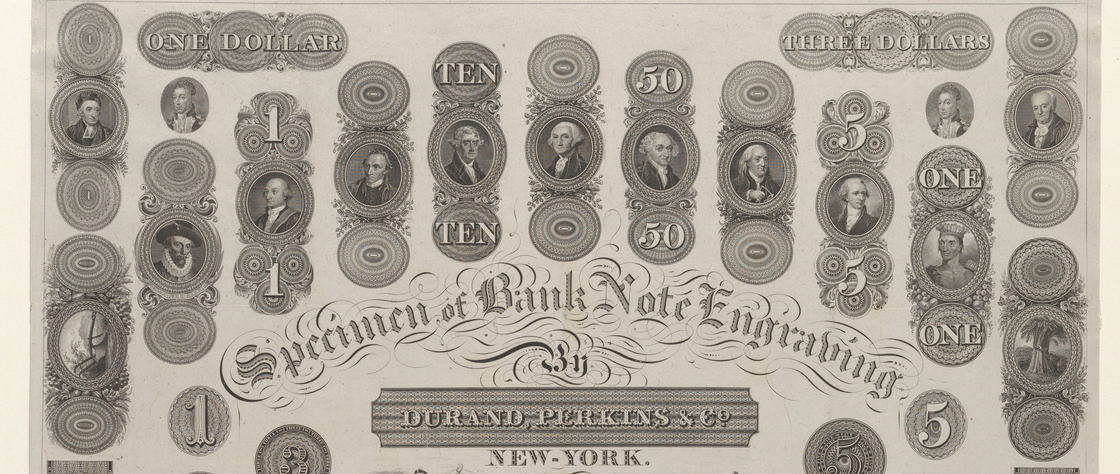
Photograph of an engraved sheet from 1828. Rows of oval counters carrying the denominations One Dollar, Three Dollars, Ten, Fifty and the numerals 1, 2, 5 and 50, each filled with a lathe-turned rosette, surround small oval portrait medallions. Across the middle, in engraved script, runs the sheet’s own title: Specimen of Bank Note Engraving by Durand, Perkins & Co., New-York.
Figure 1 — Asher Brown Durand, Specimen Sheet of Bank Note Engraving, ca. 1828, upper band. Engravers sold banks a vocabulary: counters, rosettes and vignettes to be combined into a note. The Metropolitan Museum of Art, Harris Brisbane Dick Fund, 1917; public domain. Image credits.

How a claim is made here

Every statement about an institution on this site is followed by the document it came from, the identifier that finds it again, and the day it was read. On the page it looks like this:

The bank is named Renasant Bank, sits in Tupelo, Mississippi, and holds FDIC certificate 12437.

FDIC INSTITUTION REGISTER · CERT 12437 · READ 22 SEP 2026 · api.fdic.gov

Where a document is silent, the piece says so rather than filling the gap, and where a figure can change, the day it was read is printed beside it. The standards page sets out the rest of the method, and the source register lists every document the site cites, with the date each was last opened.

Nothing published here is changed quietly. A correction that alters what the site says about a named institution is logged with its date, the page, the text that stood before, and the text that replaced it; a typographical fix that changes no meaning is made without a notice. Both rules are on the standards page, and the address for telling us we are wrong is corrections@charterbend.digital.
Photograph of a small bound account book from the eighteen-thirties, its marbled paper boards rubbed through at the corners and its leather spine worn pale.
John Carlin, Account Book Ledger, 1835–56. The Metropolitan Museum of Art, Dale T. Johnson Fund, 2009; public domain. It is nobody’s ledger in this story — it is here because this is the shape the record has always had.
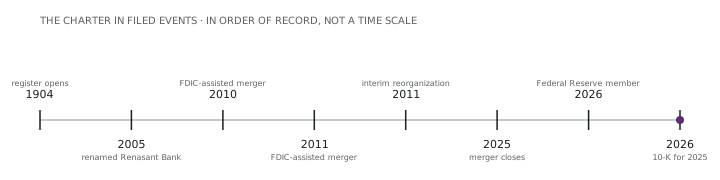
Diagram. A horizontal spine carries eight marks, one for each event the registers record against this charter: 1904, the register opens; 2005, the bank is renamed Renasant Bank; 2010, an FDIC-assisted merger; 2011, a second FDIC-assisted merger; 2011, an interim corporate reorganization; 2025, the merger with The First Bancshares closes; 2026, the bank becomes a member of the Federal Reserve System; 2026, the 10-K for 2025 is filed. The marks are evenly spaced: the drawing puts the events in order and does not measure the time between them.
Figure 1 — eight events the registers hold against this charter, in the order they were recorded. Each one has its document on the record. Drawn by Charterbend; the spacing is ordinal and not a time scale.

Contents

Every page, with the date it was last checked
#SectionPageLast verified
01The CompanyHow Renasant Corporation is organized22 Sep 2026
02The CompanyThe First Bancshares merger, in the documents22 Sep 2026
03The FilingsWhat a bank holding company’s 10-K contains22 Sep 2026
04The FilingsCall Reports: the quarterly form every bank files22 Sep 2026
05The FootprintThe FDIC Summary of Deposits, explained22 Sep 2026
06The FootprintWhere Renasant Bank operates22 Sep 2026
07The SystemHow a bank merger is approved22 Sep 2026
08The SystemThe asset thresholds that change the rules22 Sep 2026
09IndexAnalysis, by rubric22 Sep 2026
10RecordThe record: filed events, in order22 Sep 2026
11ReferenceSource register22 Sep 2026
12ReferenceGlossary22 Sep 2026
13AboutMasthead22 Sep 2026
14AboutEditorial standards and corrections22 Sep 2026
15AboutIndependence and disclosures22 Sep 2026
16AboutCommissioned research22 Sep 2026
17AboutContact22 Sep 2026
18LegalPrivacy notice22 Sep 2026
19LegalTerms of use22 Sep 2026
20LegalAccessibility22 Sep 2026
21LegalImage credits22 Sep 2026

Twenty-three pages in all. The front sheet and the thank-you page are not listed: one is this page, and the other is reached only after a form is sent.

Latest in the record

02 Mar 2026

Renasant Corporation filed its annual report on Form 10-K for the year ended December 31, 2025.

FORM 10-K · 0000715072-26-000017 · sec.gov

31 Jan 2026

Renasant Bank became a member of the Federal Reserve System. The register logs three changes the same day: membership, class and primary regulator.

FDIC STRUCTURE REGISTER · api.fdic.gov

01 Apr 2025

The merger with The First Bancshares, Inc. closed. The register logs one merger participation and 117 branches acquired the same day.

FORM 8-K · sec.gov

The full record

The mailing list

A short note when a new piece is published, at most twice a month, and nothing else.

Charterbend uses what you enter here only to reply. It is not sold, shared or used for anything else. See the privacy notice.

This site is protected by reCAPTCHA and the Google Privacy Policy and Terms of Service apply.